
The first time I went to get my oil changed, I knew nothing about cars. I was standing in line with a buddy of mine, praying they wouldn’t ask me as many questions as they asked the guy in front of me. The list of services on the sign above his head was full of phrases I didn’t understand and options I couldn’t decipher. When my turn came, I told the man I wanted an oil change. He asked what kind of oil, and my tendency to reach for sarcasm kicked in. “The blackest you got.” The stare he gave me said it all. I didn’t know what I was talking about, and he was going to hold my hand through the whole process.
Aside from some jeering from my friend, it was a mostly painless experience. Buying furniture isn’t like getting an oil change, though, because things can go a lot worse than a temporary embarrassment that fades a few miles down the road. This blog is about the most common furniture buying mistakes and how to avoid them, because hoping someone will guide you through the purchase can backfire. Even with the most excellent customer service, like you’ll get at Millwest, only you know what will work in your home. So let’s walk through the seven mistakes I see most often.
Mistake 1: Skipping the Tape Measure
This mistake causes more delivery-day heartbreak than anything else. People measure the wall where the hutch will sit, but not the hallway it has to travel through. Or they measure the room, but not the stairwell turn.
Before you buy, measure three things: the space where the piece will live, every doorway and hallway on the path to that space, and the piece itself, including its diagonal depth. A tall piece often has to tilt to make a turn, and that diagonal is what decides whether it fits.
Scale matters too. A sofa that looked modest in a showroom with 20-foot ceilings can swallow a normal living room. Painter’s tape on the floor is a cheap reality check. Height plays a role as well, especially in the bedroom, and our guide to finding your ideal bed height covers that side of the equation.
Mistake 2: Judging Quality by Looks Alone
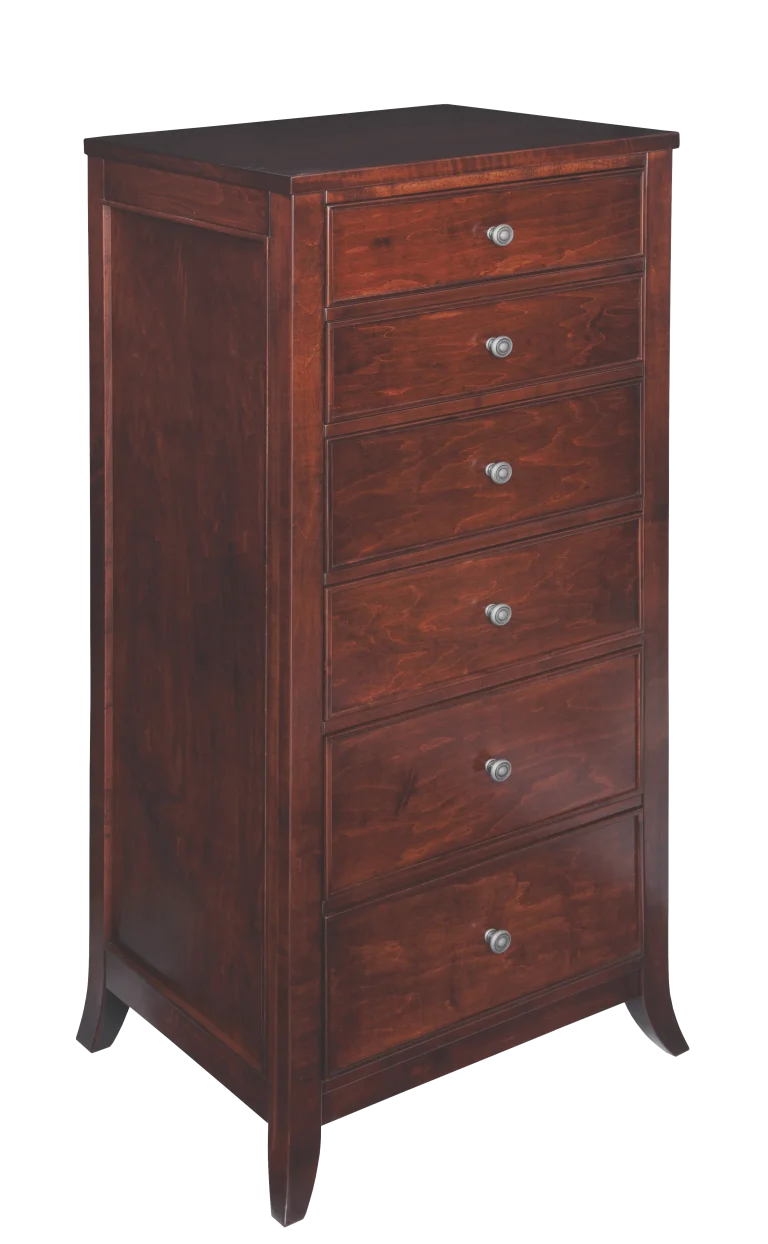
A showroom finish can hide a lot. Two dressers can look nearly identical on the outside while one is solid hardwood with dovetailed drawers and the other is particleboard with stapled corners. The difference doesn’t show up in the first year. It shows up in year five, when one drawer still glides and the other sags.
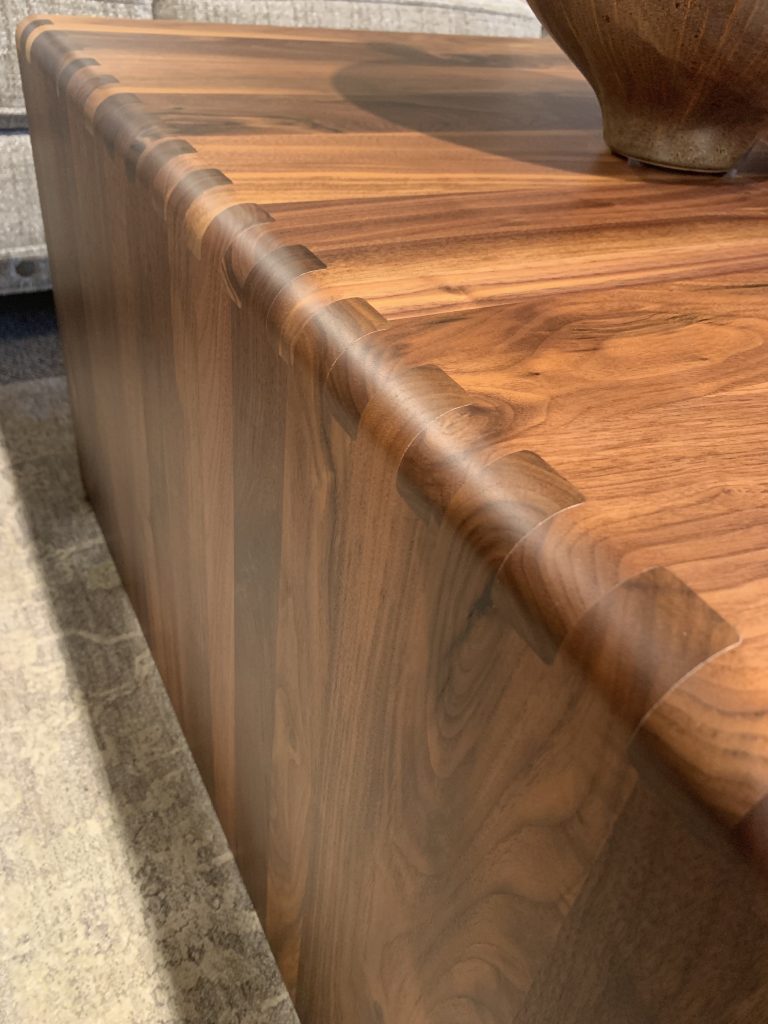
So open the drawers. Look for dovetail joints instead of staples or glue. Pull a drawer out and check whether the bottom is solid wood. Run it in and out a few times and feel whether it glides or scrapes. If you’re new to what quality construction looks like, our introduction to wood furniture is a good place to start.
Mistake 3: Buying for Right Now Instead of the Next 30 Years
Cheap furniture is only cheap once. Buy it three times and you’ve spent more than the well-built piece would have cost, and you’ve hauled two failures to the curb along the way.
This is the math that surprises people. A solid wood table that serves your family for generations costs less per year of use than the bargain piece that needs replacing every few years. We broke down that comparison in our guide to the best wood for dining room tables, and the same logic applies to every room in the house.
What These Mistakes Look Like Years Later
Furniture mistakes don’t blow up in your face immediately all the time, they can have a really long fuse. The decision happens on purchase day, but you can end up paying for it years later, and sometimes it can land on somebody else. I know because I used to be that somebody. Around the same era as that oil change, I was a mover for a company in Columbus, and that job taught me that even common sense needs to be taught. You don’t know what you don’t know.
One job was a law firm downtown, up in one of the taller buildings with a great view of the river. The whole move was billed for only five hours. Then we went to move the conference table out of the office and discovered it didn’t fit in the freight elevator. It was also too heavy and awkward for the stairs, since that would have meant lifting it above the railing, balancing it, pivoting, and descending in a coordinated effort with around five guys. After a lot of debate, we got the elevator key, positioned the car where we could load the table onto the roof, and rode that table down on top of it.
The lesson isn’t to go to any lengths to get what you want, though that might be what the lawyers took from it considering the trouble they had to have gone through to get the table into that room in the first place. The lesson is that somebody bought that table without ever asking how it would get in the room, let alone out again! Years later, five strangers were riding it down an elevator shaft because of it. Every mistake on this list works the same way. The next four are just quieter about it.
Mistake 4: Trusting Your Screen for Stain Colors
Monitors lie about color. It’s not their fault, every screen renders warmth and depth a little differently, but it means the stain that looks perfect on your phone can arrive noticeably redder or darker in person.
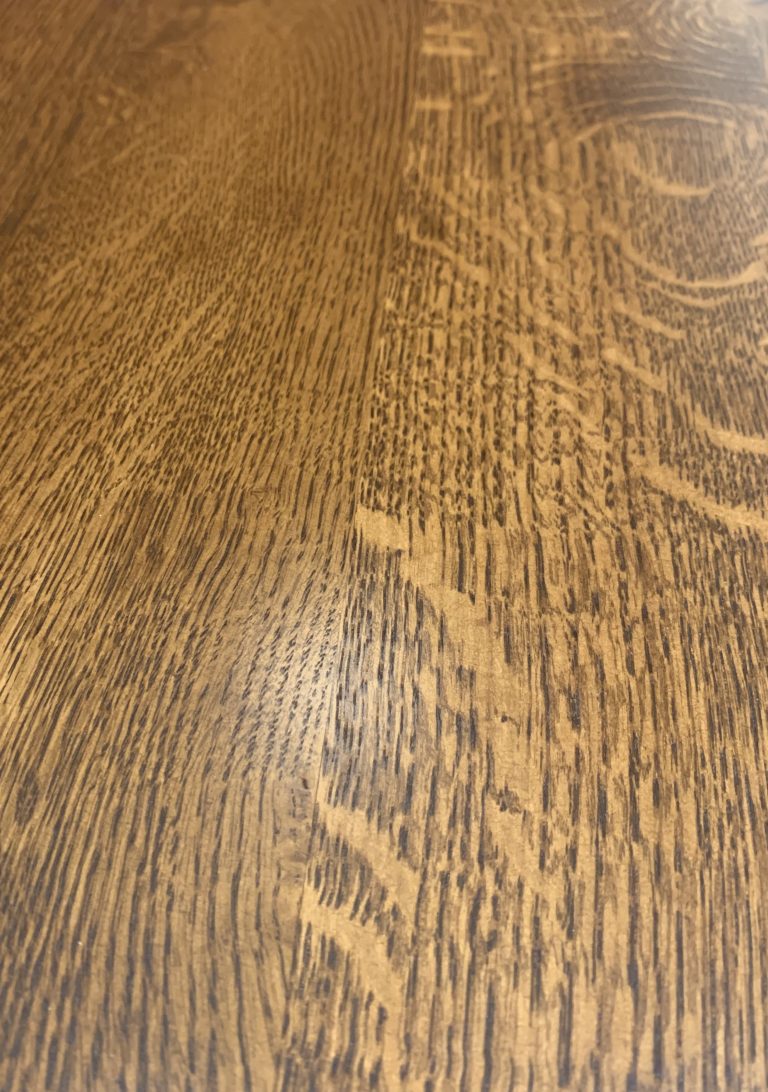
The fix is simple: order stain samples and look at them in your own home, under your own lighting, next to the furniture and flooring they need to live with. Morning light and lamp light will show you two different colors. Five minutes with a physical sample prevents a mismatch you’d live with for decades.
Mistake 5: Ignoring How You Actually Live
The prettiest wood is not always the right wood. If you have five kids and a dog, a soft, fine-grained species on a kitchen table is going to collect dents. A harder wood like oak or hickory shrugs off the daily abuse that busy households dish out, while softer species are better suited to quieter rooms.
Think honestly about the piece’s daily life before you fall in love with a grain pattern. Our wood characteristics guide compares the hardness, grain, and personality of every species we carry, and it’s worth ten minutes before you commit.
Mistake 6: Never Asking What It Has to Hold
Furniture has a job, and the job has a weight. Almost nobody asks about it, and shelving is where that bites hardest. Books are heavy. A single row of hardcovers puts a surprising load on a shelf, and a bookcase built from particleboard or thin veneered panels will start to sag under it. The sag isn’t instant, either. It creeps in over months of constant load, and once a shelf bows, it stays bowed.
Three things decide what a shelf can carry: the material, the thickness of the shelf, and the span between supports. Solid hardwood resists bowing far better than engineered panels. A thicker shelf outperforms a thin one. And a short span between supports beats a long, unsupported stretch every time. So if you’re shopping for a bookcase that will hold a real library, look for solid wood, ask how thick the shelves are, and favor designs with shorter spans or center supports.
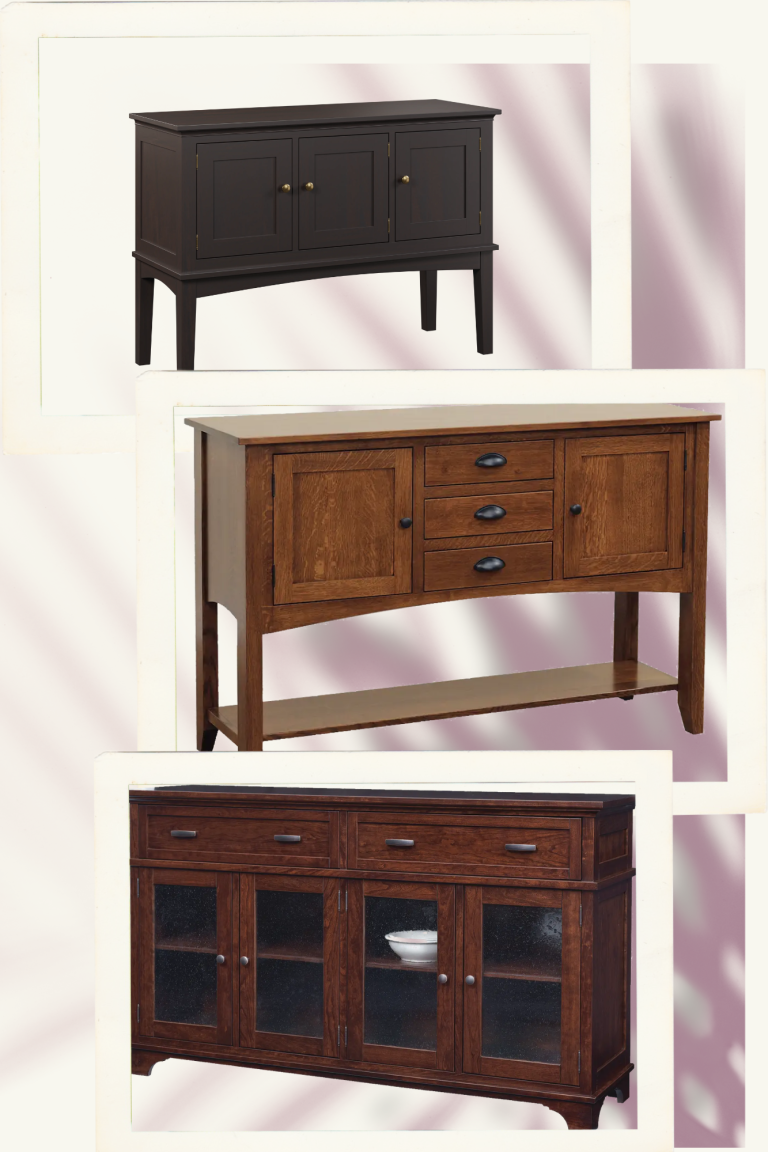
The same question applies beyond bookcases. A TV stand carries more weight than it used to, and a china hutch loaded with dishware holds more than most people guess. Before you buy, add up what the piece will actually carry, then make sure the construction matches the load.
Mistake 7: Waiting Until You Need It to Order It
Handcrafted furniture runs on a different calendar than a big-box store. When a piece is built to order in your wood and your stain, the clock starts when you place the order, not when a shipping container cleared a warehouse. Buyers who discover this two weeks before Thanksgiving learn it the hard way.
This isn’t a flaw in the process. It’s the tradeoff for getting a piece that didn’t exist until you asked for it. But it does mean timing belongs in the buying decision. Ask about lead time before you fall in love with a delivery date. If the piece is for a holiday, a move-in, or a guest’s arrival, count backward from that date and leave a buffer for finishing and delivery.
The reward for planning ahead is furniture built for you rather than for a shelf. The penalty for skipping this step is hosting the holiday dinner on folding tables.
Bonus Mistake: Assuming You Can Just Return It
Here’s one more, on the house, and it’s the mistake that makes every other mistake on this list expensive. We live in the age of free returns on everything, so it’s easy to assume furniture works the same way. It often doesn’t, and custom furniture almost never does.
When a piece is built to your specifications, in your wood, your stain, and your hardware, it can’t go back on a shelf for the next customer. There is no next customer for your exact table. That’s why made-to-order furniture typically comes with limited return options, and sometimes none at all. Read the return policy before you order, not after the truck pulls away.
The better way to think about it: with custom furniture, the decision point is the order, not the delivery. Measure, check the construction, verify the stain in person, and ask every question you have before the shop starts cutting wood. Get the decision right while it’s still a decision, and the return policy becomes a page you never need to read twice.
The Common Thread
Every mistake on this list traces back to the mover’s lesson: you don’t know what you don’t know. Each one comes from buying with your eyes instead of your head. The fix is a short list of questions. Does it fit? Is it built well? Will it survive my household? Did I verify the color in person? Will it hold what I’m asking it to hold? Does the timeline match when I need it?
Answer those before you buy and you’ll skip the regrets that fill this list. Be sure to explore the customization options on our online catalogue of furniture to find what stain and hardware is best for your furniture! Stain and hardware options vary by furniture piece and wood type. Some stains work better on certain woods, and hardware options may vary by collection.
Ready to shop with fresh eyes? Browse our furniture collections, or jump straight to dining, bedroom, or office. You can also contact us for expert guidance on furniture selection for your home. We’re happy to talk through measurements, wood choices, and stain samples before you spend a dime. And once the piece is home, our furniture care guide will help you protect it for the long haul.
Steve Payne is the Digital Marketing Specialist at Millwest Amish Furniture in Plain City, Ohio. He writes about solid wood craftsmanship, furniture care, mattress selection, and the materials that make Amish-built furniture last for generations. With deep roots in Ohio’s furniture community and direct access to Millwest’s network of Amish craftsmen, Steve brings a practical, experience-driven perspective to every article.